 StardewValleyZone
I still remember the day I stumbled out of the Skull Cavern, battered and hollow, my sword arm trembling like a wet noodle. No amount of staircases or bombs could mask the fact that my damage output was a candle flickering against an iron dusk. That was when I decided to turn my kitchen into an apothecary of destruction. In Stardew Valley, Attack is the silent engine behind every swing, and the right meal can make the difference between a triumphant haul and a humiliating 2 a.m. collapse. Over the seasons, I discovered that while the Desert Festival offers fleeting, glorious buffs, a few year-round staples can keep your blade singing all twelve months. Let me walk you through the dishes that reshaped my adventures—each bite a pact with power.
The first reliable friend I made was the Fried Mushroom. It isn’t flashy, but like a loyal mule on a treacherous mountain pass, it carries you steadily. I remember Demetrius handing me the recipe after I helped him with a few cave-crawling experiments; a simple mix of Common Mushroom, Morel, and Oil. Cooking it felt like bottling a piece of the forest’s quiet resilience. What I love most is how easy it is to acquire—Krobus sells it on Saturdays, it turns up in the Saloon’s trash, and during the Feast of the Winter Star you can snag one for 2,500g. The +2 Attack boost lasts a calm seven minutes, enough to clear a few levels without overconfidence. It might not turn you into a whirlwind, but it turns your pickaxe into a needle of consistent precision.
Then came the Roots Platter, unlocked at Combat Level 3. I crafted my first batch after a particularly brutal fuchsia-hued slime swarm taught me that the mines do not forgive hesitation. The platter—just Cave Carrot and Winter Root—looks humble, but its +3 Attack for over five minutes is a snarling wolf packed into a shepherd’s lunch. I’d often find myself with extras after a deep dive, and selling them to Marlon’s Guild felt like turning old scars into gold. What fascinates me is the dish’s hidden generosity: Skull Cavern treasure rooms sometimes gift you up to five at a time, as if the mines themselves approve of your preparedness. It became my baseline, the dull roar of a campfire that never went out.
But the true alchemy happens when the Desert Festival rolls around, a temporary carnival where the Chef Stall becomes a crucible of temporary might. The first one I ever tried was the Warrior Smoothie, a blend of Rare Fruit and Pungent Garlic that tastes like a dare. It grants +1 Attack and +3 Luck for seven minutes—on paper, the Attack boost looks modest, but the Luck infusion is a secret melody. Luck in Skull Cavern is like throwing a handful of glitter into a dark room; you suddenly notice treasure floors that would otherwise remain invisible, and monster loot becomes a cascade of prismatic shards and spicy eel. I learned to pair a Warrior Smoothie with a day when the spirits were already in good humor, stacking luck like a gambler who knows the dice are loaded. The effect was subtle but undeniable: a gentle nudge that turned every serpent into an opportunity.
Of course, sometimes you need to feel like a walking fortress. That’s where Calico Pizza enters the scene. I still recall the first time I bit into that molten slab of Extremely Sharp Cheddar and Rich Marinara; it was like wrapping myself in chainmail woven from starlight. +3 Attack and +1 Defense synergize beautifully—you hit harder and the hits you take feel less like sledgehammers and more like rain. In the lower mines, where shadow brutes hurl dark orbs and mummies rise from the dust, that extra Defense is a hymn of survival. I used the pizza to push past level 100 in Skull Cavern without chugging healing potions every three seconds. Durability became my new speed; I was a glacier carving a valley, unstoppable and cold.
For pure, ecstatic efficiency, nothing delighted me more than the Elf Quesadilla. Its recipe mirrors the Calico Pizza but substitutes Mushroom Cream for the marinara, yielding +3 Attack and +1 Luck. The first time I ate one, on a day when the fortune teller predicted a shower of good omens, I swore the dungeon itself leaned in my favor. Each lucky break felt like a breadcrumb leading me deeper: ladder shafts appeared with a wink, crates burst with artifacts, and the dreaded serpents dropped their precious spicy eel with almost mocking regularity. The quesadilla became my talisman for “maximizing a lucky day”—I’d stockpile four, enter the Cavern at dawn, and emerge at midnight with pockets so fat they groaned. It’s a dish that turns probability into a loyal dog, bounding ahead to fetch you wonders.
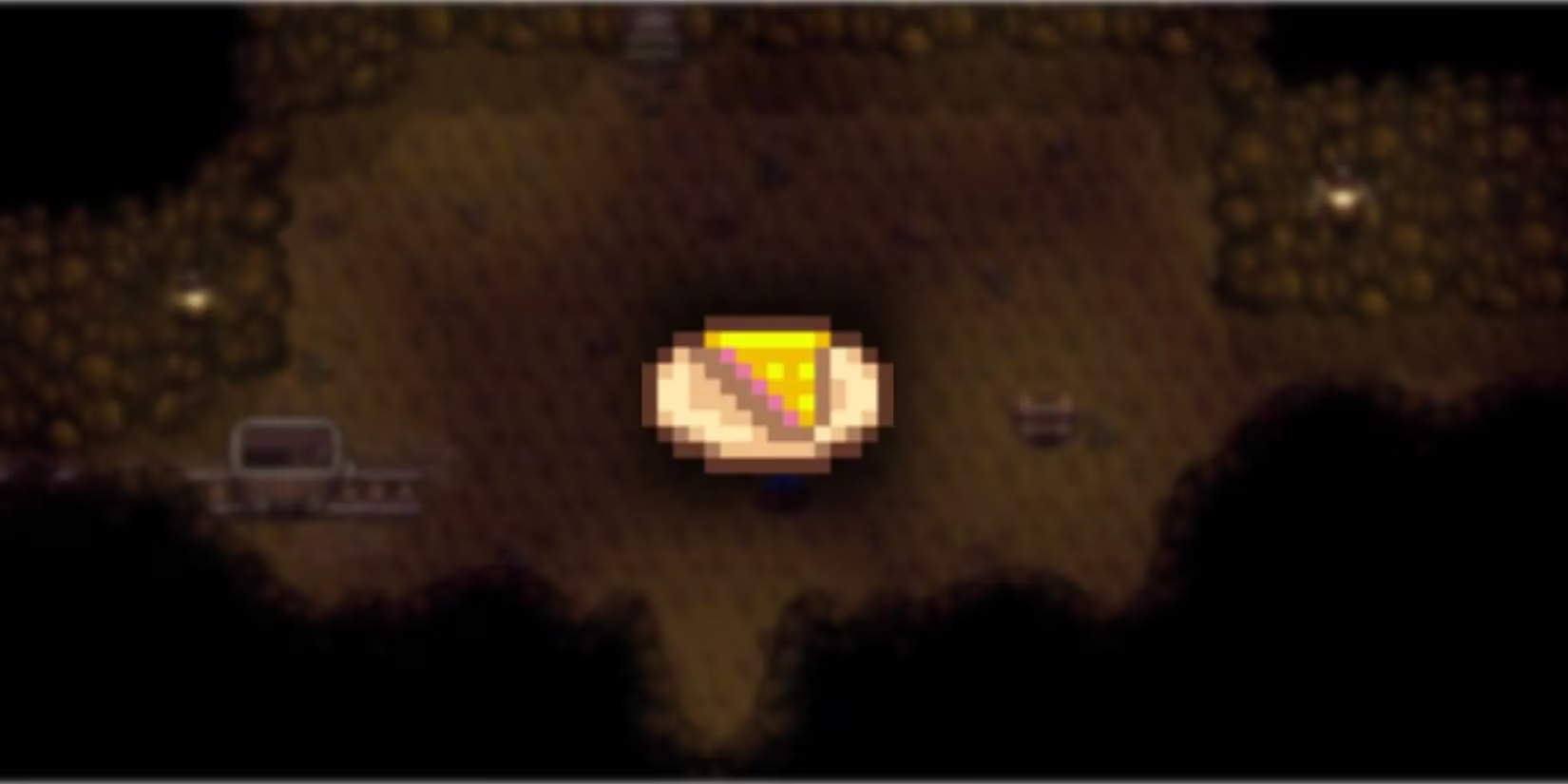
But the desert sun also bakes a firecracker of speed: Nachos of the Desert. Made with the same sharp cheddar and an Uncomfortably Hot Sauce that lives up to its name, these nachos gift you +3 Attack and +1 Speed for seven minutes. Speed is a shape-shifter; it turns the Skull Cavern’s sprawling floors into a choreographed dance. I could sidestep charging serpents as if they moved through honey, reach distant ladders before the screen could scroll, and reset my attack animation so fast that enemies melted like candles in a kiln. When Marlon issued his Monster Eradication quotas—slay a hundred dust sprites, vanquish fifty peeper rex—I’d pop a plate of Nachos and turn the hunt into a blur of steel and laughter. It felt like strapping rockets to my boots, a kinetic, joyful violence that made the mines feel less like a tomb and more like a playground.
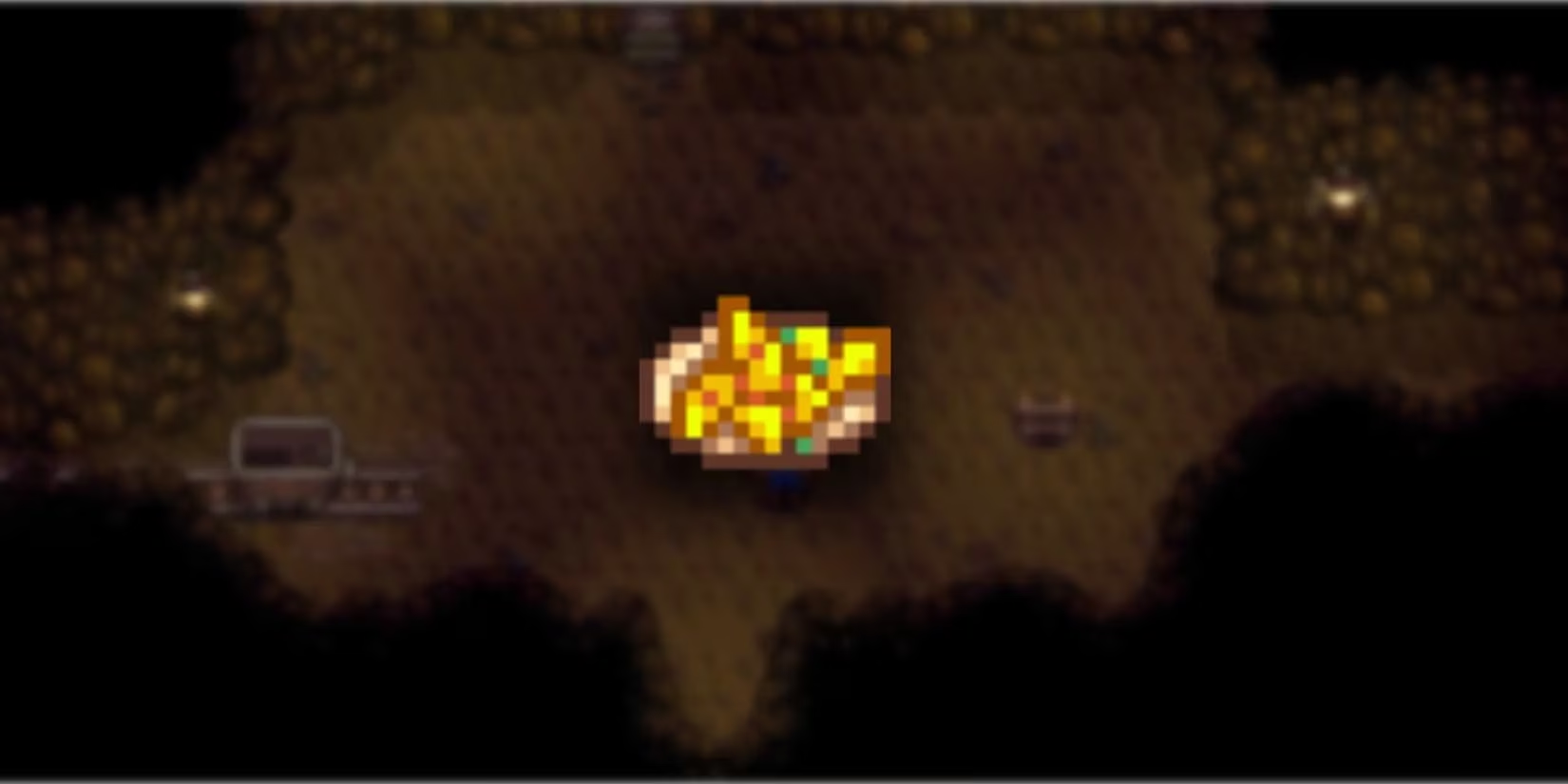
And then, there is the apex predator of all edible buffs: Magic Rock Candy. These shimmering azure shards are less a food and more a crystallized legend. Obtaining one is an odyssey in itself—I traded three Prismatic Shards to the Desert Trader on a Thursday, my heart pounding as if I were handing over pieces of the sun. The candy cannot be cooked; it has a 0.13% chance to drop from Haunted Skulls, or you might win it from the Prize Machine after 22 pulls. When I finally crushed that candy between my teeth, the world tilted. +5 Attack, +2 Mining, +1 Speed, +5 Defense, +5 Luck for 8 minutes and 24 seconds—it was every buff distilled into a single, ecstatic roar. My pickaxe became a bolt of lightning, my boots a zephyr. I descended into the cavern not as a farmer but as a mythic catastrophe. The candy’s drawback is its rarity: you hoard it like a dragon guards a single egg, and you use it only when the stars align. On that one perfect run, though, it made me feel like I had swallowed the core of the mine itself—incandescent, indomitable, and briefly infinite.
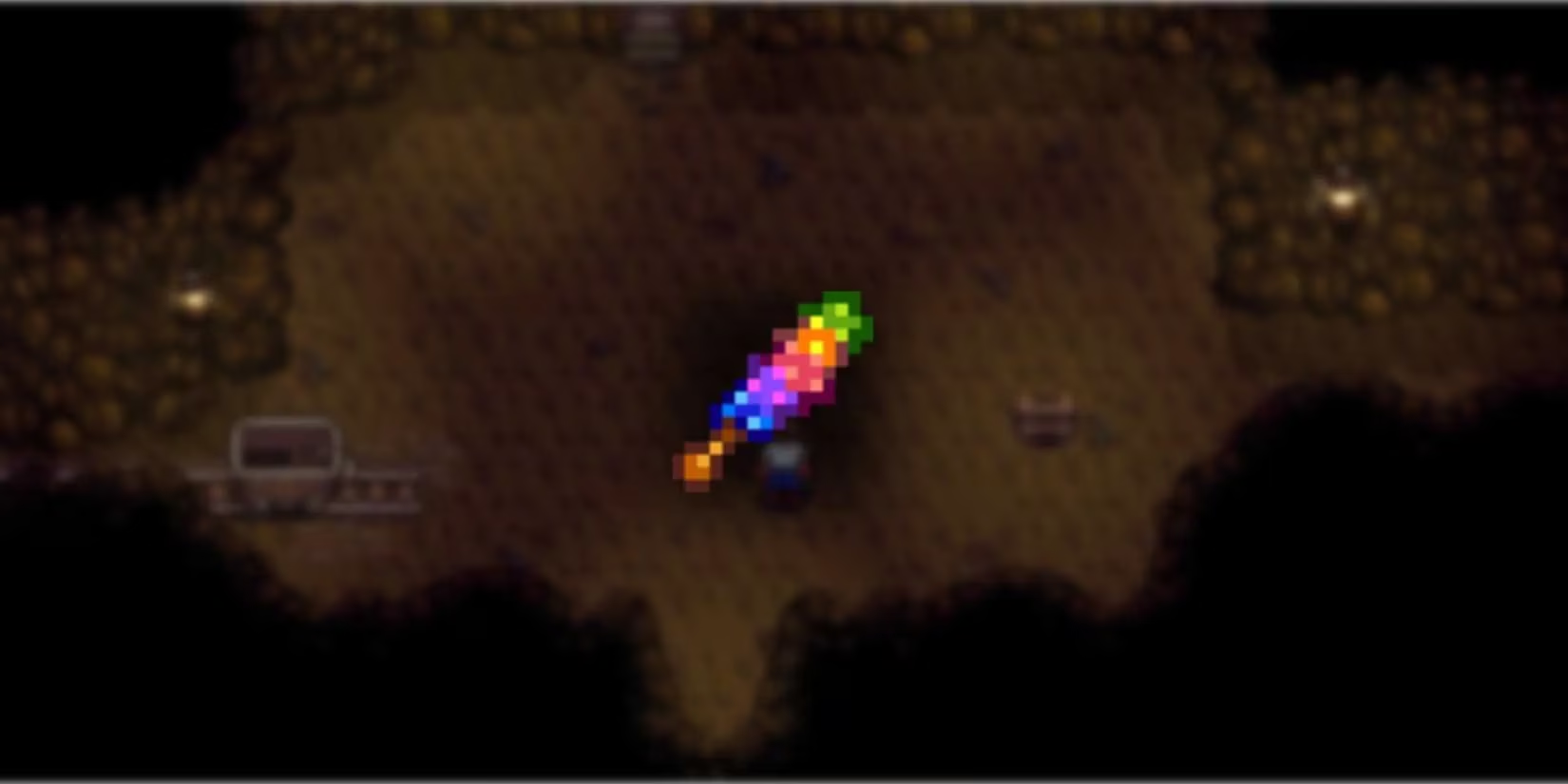
Looking back, my culinary journey was a gradual awakening. The Fried Mushroom was the quiet morning tea, the Roots Platter the sturdy lunch pail, while the Desert Festival’s creations were the fleeting fireworks that lit up my darkest delves. Each dish taught me a different rhythm: luck for treasure, defense for endurance, speed for efficiency. I learned to weave them together, to plan a menu for the day based on the fortune teller’s whispers and the depth I aimed to reach. Attack is not just a stat—it’s a language you share with every monster you slay, and these foods are the grammar that makes your sentences land with weight. In Stardew Valley’s 2026 landscape, where the mines remain hungry and the Skull Cavern still yawns with ancient malice, a well-fed farmer is a force of nature. So the next time you hear the distant chitter of a serpent or the groan of a mummy, remember: your kitchen is a forge, and every meal is a hammer waiting to break the stone.
The following breakdown is based on reporting from UNESCO Games in Education, which discusses how games reinforce systems thinking—exactly the mindset that makes Attack food in Stardew Valley feel so transformative: you’re not just “getting stronger,” you’re optimizing a loop of time, risk, and reward by matching short buff windows (Attack, Luck, Speed, Defense) to the kind of mine run you’re attempting, so each meal becomes a deliberate tactical input rather than a comfort item.