 StardewValleyZone
Let me tell you, as a seasoned pixelated farmer myself, I thought I'd seen everything in Stardew Valley. I've wrangled slimes, romanced bachelors by giving them rocks, and accidentally gifted my entire harvest to the trash can. But then, I stumbled upon a farm layout so meticulously organized, so utterly extra, that it made my haphazard field of parsnips look like a toddler's finger-painting. We're talking about a Ginger Island paradise where every single crop is planted in neat, perfect squares, each with a sprinkler at its heart, and the entire botanical menagerie is arranged in flawless alphabetical order. I mean, who does that? A genius, that's who. The player behind this masterpiece, known online as matthewbeynon, has essentially written a love letter to the game's crop catalog using the soil as their parchment.
This wasn't just about planting some blueberries next to some cranberries. Oh no. This was a scholarly endeavor. The creator clarified that this grand taxonomy includes every single seed crop—fully grown, mind you—in order of their in-game names, with some linguistic finesse applied. For instance, "common mushroom" gets filed under "M" for "Mushroom," and "blue jazz" simply becomes "Jazz." Trees, tea bushes, and those pesky Qi fruits were wisely excluded from this botanical library. The sheer dedication is palpable. Imagine the focus required to not accidentally right-click and harvest a crop you've been waiting days for! One misclick, and you're back to square one, waiting for that precious melon to reappear. And don't even get me started on the wild seeds—those little packets of chaos that force you to play a game of agricultural roulette until the right plant pops up in the right alphabetically designated plot.
The creator themselves admitted the process took "a good amount of work and a Google sheet." I can picture it now: a spreadsheet more complex than Joja Corp's business plan, with columns for seed names, growth times, and grid coordinates. This level of planning transforms farming from a relaxing pastime into a glorious, self-imposed logistical puzzle. It's the kind of project that makes you wonder, 'Are they okay?' followed immediately by, 'I must try this.' The Stardew Valley community, never one to shy away from eccentricity, was suitably awestruck. One Redditor, JamesFromRedLedger, called it "insanely impressive," while noxiousfumes269 bestowed the highest honor: "top-tier... A+ no notes."
But wait, the saga doesn't end on Ginger Island! In a twist as delightful as finding a prismatic shard, a fellow farmer, JaneTheSnowman, threw down a chromatic gauntlet: "Nice job, next time I wish to see them in rainbow order." And wouldn't you know it, matthewbeynon was already ten steps ahead. They had a secret weapon: the trusty, weather-proof Greenhouse. This sacred space, a sanctuary for year-round cultivation, had already been transformed into a vibrant spectrum of produce.
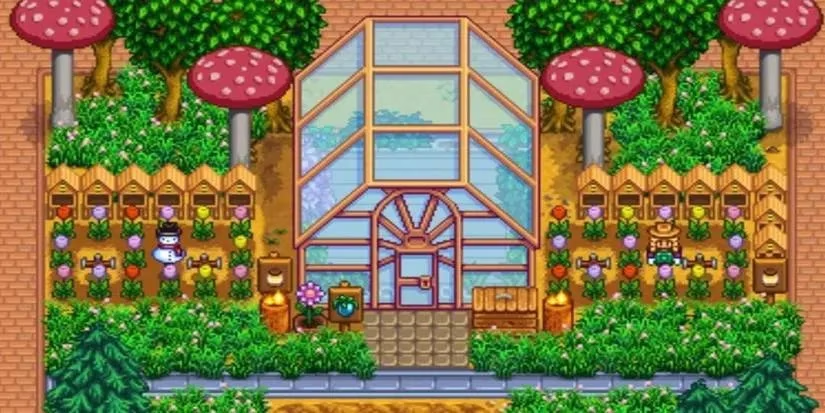
They posted a follow-up to showcase this rainbow-hued haven. Imagine walking into that greenhouse: a cascading vista of red strawberries melting into orange peppers, flowing into golden corn, then into green beans, blue blueberries, and indigo eggplants. It's agriculture meets artistry. The greenhouse, with its perpetual summer, is the perfect canvas for such a chromatic masterpiece, free from the tyranny of seasonal restrictions. These two farms—the alphabetical archive and the chromatic gallery—stand as twin monuments to what happens when a cozy game meets a profoundly creative and slightly obsessive mind.
What truly blows my mind, even in 2026, is how this nearly decade-old game continues to inspire such profound and playful dedication. It's a testament to the sandbox Eric 'ConcernedApe' Barone built. Players aren't just growing crops; they're conducting symphonies of soil, painting with seeds, and building libraries of legumes. This specific farm layout is more than efficient; it's a statement. It says, 'I have conquered the chaos of nature and imposed a beautiful, nerdy order upon it.' For those of us staring at our own disorganized plots, wondering why our pumpkins are next to our tulips, these creations serve as both inspiration and a friendly challenge. Maybe we don't need to go full alphabet soup, but perhaps a little more planning—or a colorful greenhouse arrangement—could be just the sprinkle of joy our farms need. The beauty of Stardew Valley is that whether you're a min-maxing efficiency expert or a whimsical rainbow farmer, there's always a new row to hoe, a new seed to sow, and a new, wonderfully bizarre way to leave your mark on the valley.