 StardewValleyZone
I still remember the first time I stumbled across the early screenshots of a little farming game called Stardew Valley back in 2012. My gut reaction? "Oh great, yet another Harvest Moon knockoff." I wasn't alone. Reddit threads were absolutely brutal, full of folks calling it a blatant rip-off and a cheapo imitation. Someone even predicted a lawsuit from Natsume the moment it launched. A decade later, I’m sitting here feeling pretty silly, because that "clone" has now sold over 41 million copies and become the gold standard of cozy gaming. The irony is thick enough to spread on toast.
I’ve been a Harvest Moon superfan since the SNES days, so I understood the skepticism. When you’ve spent countless hours wooing villagers with turnips and parsnips, any new face in the farming sim scene feels like an intruder. But developer Eric Barone (aka ConcernedApe) wasn't just copy-pasting nostalgia. He’d later say on Reddit, "My whole reason for making Stardew Valley was to eventually add all the things that I wished Harvest Moon did." And dang, did he deliver. He took the cozy blueprint, added combat, free-form farming, same-gender marriage, and a world that felt alive in ways the classics never quite managed. Back then, though, the internet wasn't ready to hear it. To many, pixel art farming plus relationship mechanics equaled shameless clone.
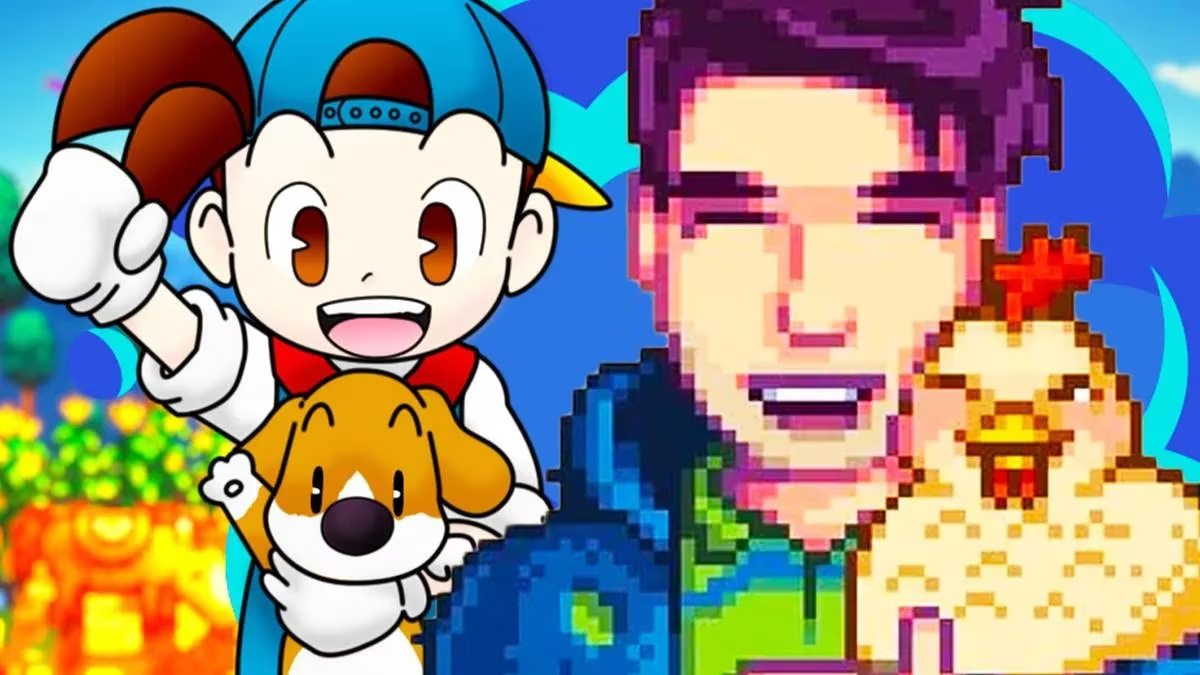
Fast-forward to 2026, and the tables have turned so hard they'd make a wine barrel jealous. Now, if a new life sim drops with even a hint of farming, romance, and a seasonal festival, the vocal corner of the internet screams "Stardew clone!!" without missing a beat. I’ve watched games like Coral Island, Wylde Flowers, and Fields of Mistria get branded as derivative before people even boot them up. The keyboard warriors forget that their beloved Stardew was once the underdog wearing that exact same label. Talk about a knee-jerk reaction. The cozy gaming community can be a tough crowd, but the truth is, this cycle of inspiration is exactly how genres evolve.
ConcernedApe himself said it best back in that same 2012 Reddit thread: "I believe that 'clone' type games are important for the video game world, as they allow genres to evolve and hopefully result in more unique and varied gaming experiences." He wasn't out to steal Harvest Moon's thunder; he was crafting a love letter that fixed the annoying bits and brought a classic vibe to PC with multiplayer and mods. I’ve come to see that the line between derivative and innovative is a tightrope. Palworld had the same song and dance with Pokémon – accused of being a clone, until defenders argued it did what Game Freak wouldn’t dare. Good clones take a formula and push it to the next level. Bad ones just hit copy-paste.
Looking at Stardew Valley today, it’s practically a living lesson for game devs. Even now in 2026, ConcernedApe keeps dropping free updates that would make other studios blush. The 1.6 update finally hit consoles and mobile last year, adding so much content I had to cancel my weekend plans. Meanwhile, Haunted Chocolatier is still simmering in the background, and I have zero doubts it’ll bring its own twist. The man is allergic to coasting. He once told a detractor, "Stardew Valley might not be the game for you, but I think a lot of people will be happy having a farming RPG on the PC that they can mod, play with their friends, and always know that there is more content and updates lurking around the corner." Those words aged like fine wine.
What grinds my gears is when folks act like clones are inherently evil. Sure, outright theft is gross. But taking a seed and growing your own darn garden? That’s the backbone of every creative industry. My Time At Portia dived deeper into crafting and workshop building. Coral Island brought ocean conservation into the mix. Each one owes a debt to Stardew, just as Stardew owes one to Harvest Moon, and Harvest Moon owes a nod to earlier farm sims. It’s a beautiful chain of "what if?" that makes the genre richer with every iteration. Without so-called clones, we’d probably be stuck replaying Back to Nature on an emulator – which, don’t get me wrong, is charming, but variety is the spice of life.
I chuckle now when I see kids on forums defending new games from clone accusations by saying, "It’s just inspired, not a copy!" That’s exactly what ConcernedApe was telling us over a decade ago, and we all rolled our eyes. The very fact that Stardew Valley rose from internet laughing stock to untouchable icon proves that passion projects with genuine care can flip the script. As I type this in 2026, I keep an eye on upcoming indie life sims because you never know which one will be the next Stardew. Maybe one day, a plucky developer will take what ConcernedApe built and spin it into something so fresh that the clone label melts away into a new legacy. And when that happens, I’ll be right there, remembering that back in 2012, I almost missed the bus because I was too busy yelling "cheapo imitation" into the void. Lesson learned: never underestimate a dev with a dream and a hoe. 🚜💖