 StardewValleyZone
On February 26, 2026, Stardew Valley officially turns ten years old, and the milestone has transformed a quiet indie launch into a global celebration of resilience and belonging. In the sprawling expanse of Pelican Town, millions have found more than a farming simulator – they have discovered a second home. What began as the solo vision of Eric Barone, known as ConcernedApe, has blossomed into one of the most beloved life-sims ever created, a title that continues to resonate deeply with players who seek solace, purpose, and a gentle rhythm in an often overwhelming world.
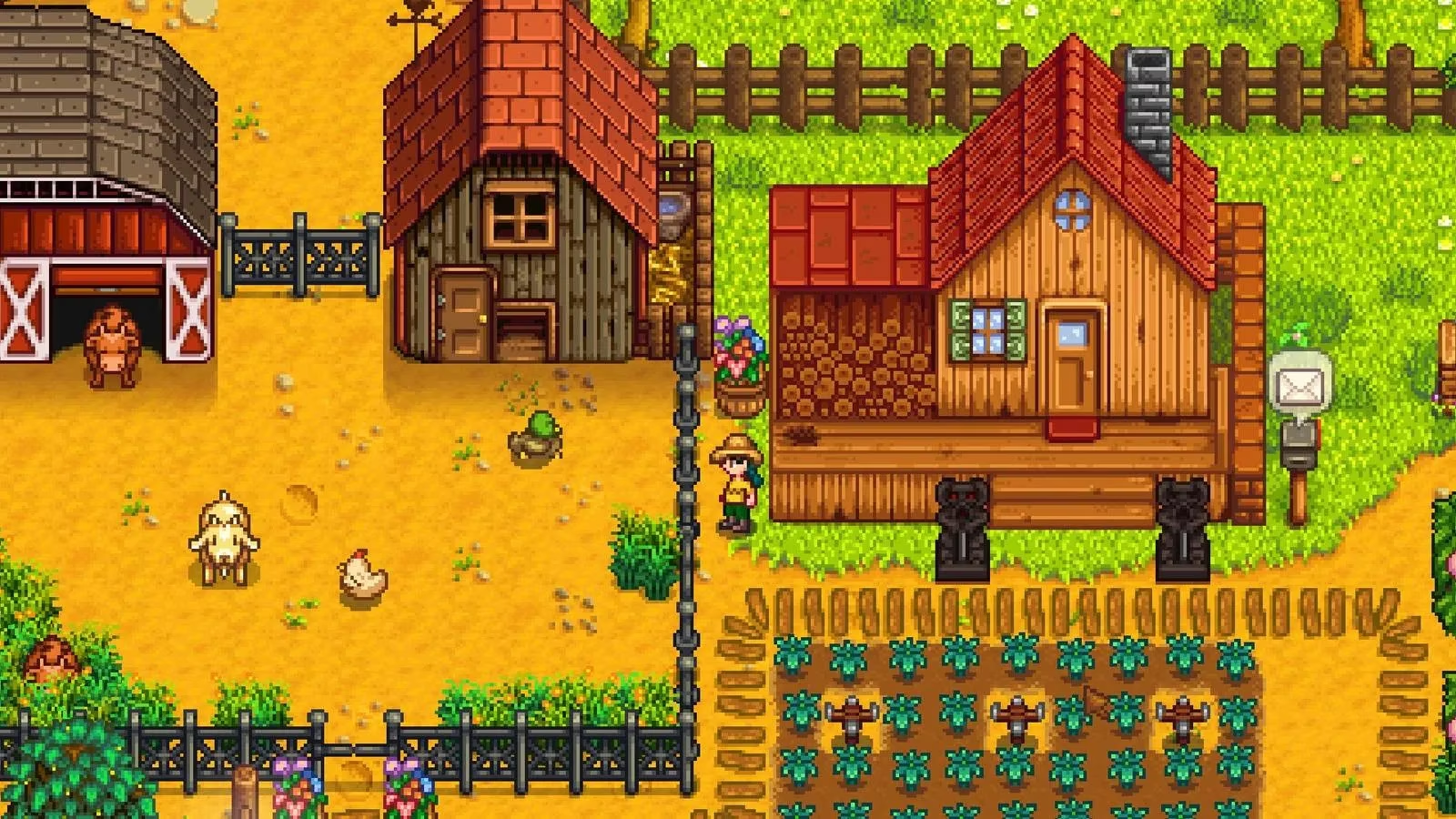
Across social platforms, the tenth anniversary has reignited a wave of emotional testimonials, much like the ones that surfaced at the nine-year mark in 2025. On Reddit, a user named erskol had then highlighted how the game was “a beacon of hope for those who feel alone and helpless,” and that sentiment echoes even louder today. Another player, cocoapods, shared a story that became emblematic of Stardew Valley’s quiet power: “Stardew Valley saved me from hopelessness. There IS something to look forward to every day.” These words, originally posted during the previous anniversary, have resurfaced in 2026, joined by new voices that describe the game as a lifeline during personal crises, global uncertainties, and political turmoil. NoRainbowOnThePot’s confession – “I am currently playing again to escape the political decisions around the world” – remains painfully relevant, proving that Pelican Town’s gentle embrace never really fades.
The numbers behind this phenomenon are staggering. Since its original release in February 2016, Stardew Valley has sold over 41 million copies across all platforms, generating billions of dollars and reaching every corner of the planet. Players routinely purchase the game multiple times – on PC, console, and mobile – just to carry their farm in their pocket. Such loyalty stems from an experience that prizes gradual growth over instant gratification. Every in-game morning brings the possibility of a new crop to harvest, a hidden Junimo to discover, or a fleeting cutscene with a villager that deepens a friendship. The game never rushes; it simply waits, patient as the turning seasons.

Much of the game’s longevity can be attributed to ConcernedApe’s unwavering commitment to free, substantial updates. From the early addition of new marriage candidates and farm layouts to the game-changing 1.5 update that introduced Ginger Island, each expansion has layered fresh depth onto an already rich world. The 1.6 update, released in 2024, brought even more late-game content, seasonal festivals, and quality-of-life improvements that made the valley feel more alive than ever. By 2026, whispers of a quiet 1.7 patch have emerged in developer blogs, hinting at new heart events, a mysterious northern region, and expanded co-op features – promises that ensure players will keep returning for another decade. This philosophy reflects the words ConcernedApe wrote in his original launch announcement: “there's a huge amount of content to discover.” Back in 2016 that was already true; today it feels almost like an understatement.
The allure of Stardew Valley goes beyond mechanics and into a therapeutic space that mental health advocates have often praised. Its design encourages mindfulness: watering crops requires a steady rhythm, fishing rewards patience, and mining offers just enough tension to make the safe return home feel earned. Unlike many modern games that demand relentless optimization, Stardew Valley allows players to set their own pace, to fail without punishment, and to find meaning in simple, repetitive tasks. In a hyperconnected world where burnout is common, the valley’s deliberate slowness becomes an act of rebellion and self-care.
As the game turns ten, the modding community has also reached an impressive maturity, adding everything from expansive new regions like Stardew Valley Expanded to countless aesthetic and quality-of-life tweaks. These grassroots contributions keep the experience fresh and reflect the devotion of a fandom that sees the game not as a product but as a canvas. JojaMart or Community Center? Min-Maxer or flower arranger? The choices are never prescriptive, only personal. Every farm tells a unique story, and every player finds their own version of home.
The emotional core of Stardew Valley lies in its ability to mirror life while softening its edges. Relationships with villagers are messy and slow – Shane’s struggles with depression, Penny’s quiet loneliness – but they are navigable. The seasons turn reliably, and even the harshest winter gives way to a burst of spring wildflowers. For many, this cycle becomes a metaphor: there is always a new day, a new chance, a new seed to plant. In a decade marked by profound global challenges, that simple truth has become a cornerstone of comfort.
ConcernedApe’s journey from a lone developer to the steward of a cultural touchstone is itself a Stardew Valley story. Driven by a desire to create a Harvest Moon-like experience that captured what he loved, he spent four years painstakingly coding, composing, and drawing every pixel alone. That solitary devotion has spawned a community that stretches across language barriers and continents. At gaming conventions, fan gatherings, and online forums, players swap stories of their first giant pumpkin or their wedding to Abigail as if recalling cherished real-life memories.
As the sun rises on Stardew Valley’s second decade, the game shows no signs of wilting. New players discover it every day through word-of-mouth and subscription services, while veterans return like migratory birds. The world may have changed dramatically since 2016, but Pelican Town endures – a pixelated constant where chickens need feeding, parsnips grow on schedule, and the saloon is always open on Friday nights. It is, as so many have said, a place where one can simply breathe. Here’s to ten more years of hopeful mornings and star-filled skies.
Data referenced from SteamDB helps contextualize how Stardew Valley’s decade-long momentum is sustained not just by nostalgia, but by steady platform visibility—where long-tail player interest, periodic spikes around updates, and ongoing storefront activity all reinforce the game’s reputation as a “forever” comfort sim that people return to whenever they need a calm, reliable routine.