 StardewValleyZone
Listen, I’ve been farming in Pelican Town for years now, and if there’s one piece of equipment that’s basically a money-printing machine, it’s the good old keg. It’s 2026, and while we’ve seen some wild new efficiencies in other sims, Stardew Valley’s artisan economy still hinges on turning your hard-earned crops into top-shelf bevvies. Forget just dumping your raw harvest in the shipping bin – that’s a rookie move. If you want to seriously upgrade that dilapidated old farmhouse and buy yourself the Gold Clock without grinding until you’re blue in the face, you need to build an army of kegs. The logic is simple: slapping a humble fruit or grain into a keg always, without fail, jacks up its value. It’s the ultimate "work smarter, not harder" strategy.

I’m not just in it for the cash, though that’s a massive perk. Kegs are the secret sauce to becoming the most popular person in town. I’m telling you, becoming the go-to supplier for the villagers’ favorite drinks is a game-changer. Take Pam, for instance; she’s been the bus stop regular since day one, and she absolutely adores a cold Pale Ale. Handing her one feels like cheating the friendship system, rocketing you to her favorite person status in no time. Doc Harvey? The man works himself to the bone and deeply appreciates a fine Wine. Honestly, pretty much every adult in Stardew Valley will melt faster than ice cream in summer when you gift them an artisan beverage. Just a pro tip from a seasoned player: stick to giving the kids Joja Cola or foraged flowers. You don’t want to be the guy explaining to Marnie why you gave Jas a pint of beer.
So, how do you get your greasy hands on this sacred knowledge? The gateway to the keg empire is unlocking the crafting recipe. You’ve got a couple of routes here. The most reliable method, which I swear by, is completing the Artisan Bundle in the Community Center. It’s a bit of a checklist adventure that pushes you to explore a bit of everything the valley offers, and the reward is totally worth it. Alternatively, if Lady Luck is on your side, you might snag it from the Mayor's Prize Machine, but I wouldn't bet the farm on it. Once you’ve got the blueprints, the ingredient list is a walk in the park for any halfway-established farmer. You’ll need to smack some trees around for 30 Wood, mine some copper and iron ore to smelt into a Copper Bar and an Iron Bar, and finally, tap an Oak Tree to harvest some Oak Resin. Honestly, it’s a no-brainer for how early you can get these materials together.
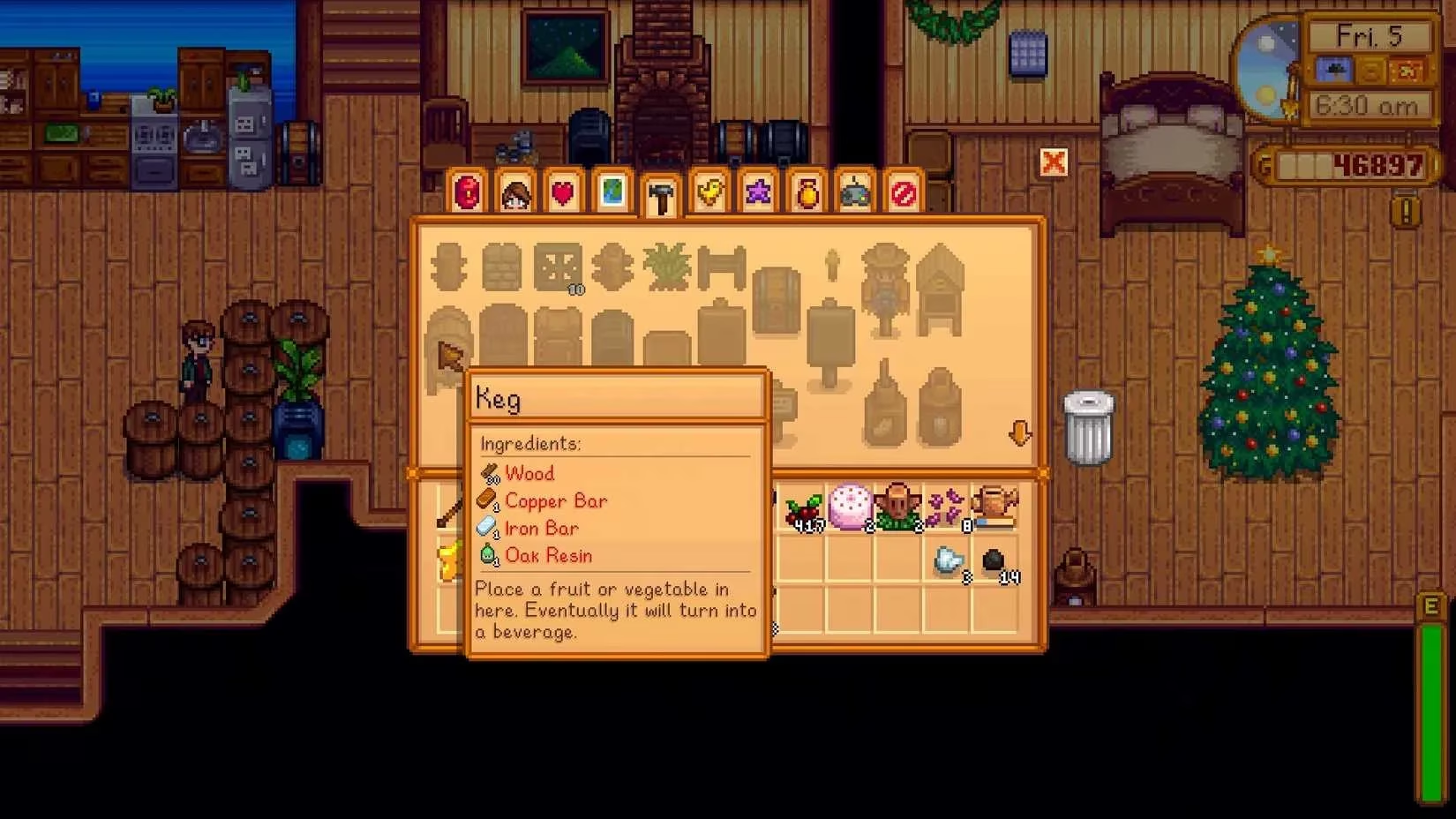
Using these bad boys is a piece of cake, even if you’re a bit of a newbie. The real magic is in the experimentation. The final product your keg spits out is entirely dependent on what you feed it, opening up a whole new layer of strategy for your crop layouts. It’s straightforward: walk up to a keg with an eligible item in hand and dump it in. Then, you play the waiting game. While it might take a few in-game days for the beverage to ferment to perfection—a period that can feel like an eternity when you’re waiting for that Starfruit Wine money to roll in—the payoff is chef’s kiss. Once the animation stops, just interact with the keg to collect your delicious profit and immediately refill it to keep the cycle going. In a pure vanilla game without any mods, you’ve got exactly eight different beverage types you can produce, giving you a solid range of products to master.
Here’s a quick rundown of what you can expect to churn out:
-
Juices: Made from most veggies, a simple way to add value.
-
Wines: The big-ticket moneymakers from fruits like Ancient Fruit and Starfruit.
-
Ales & Beers: Pale Ale from Hops and straight-up Beer from Wheat.
-
Coffees: A must-have for speed boosts, made from five Coffee Beans.
-
Mead: A sweet deal from any wild honey you’ve got lying around.
-
Specialty Items: Green Tea from Tea Leaves, perfect for a zen vibe.
What I absolutely adore about this piece of equipment is its sheer versatility. The keg’s design and its product list mean it’s a rock-solid investment no matter your play style. Even if you’re not min-maxing a huge industrial farm and just love spending your days foraging, a keg is still your best friend. You can turn a common Salmonberry or Blackberry, which sells for a pittance on its own, into a respectful Salmonberry Wine that gives you a tidy little profit. It transforms otherwise low-value items into a legitimate income stream. If you haven’t already dedicated a corner of your cellar or a Big Shed to a battery of these wooden wonders, you’re leaving serious money on the table. It’s the backbone of turning a charming little homestead into a true artisan powerhouse in Stardew Valley. 🍷✨