 StardewValleyZone
When the enchanting magical school simulator Witchbrook was first teased, the world looked quite different. Barack Obama was still in the White House, Pokémon GO had just taken over the streets, and Stardew Valley was still a fresh indie phenomenon. Now, in 2026, the wait is over – and the wizarding world of Witchbrook has proven to be well worth the patience.
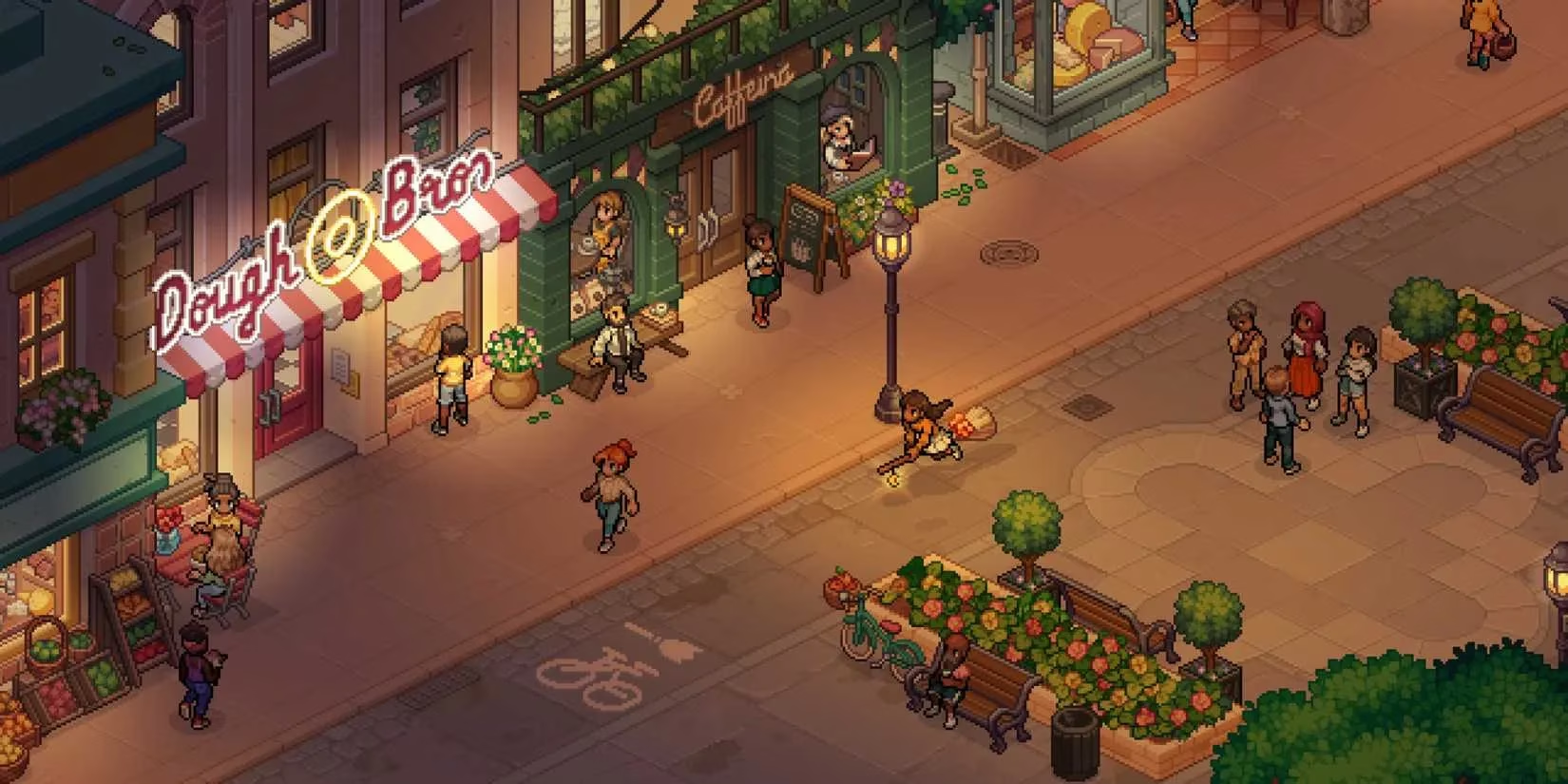
The story of Witchbrook is almost as magical as the game itself. Originally announced in 2016 by Chucklefish Games, the publisher behind Stardew Valley, it promised players a life of wizardry and scholarship set in a charming pixel-art college. Early glimpses showed a top-down perspective reminiscent of its farming cousin, but by 2018 the vision had evolved into a lush isometric art style, drawing comparisons to Habbo Hotel with its distinct retro charm.
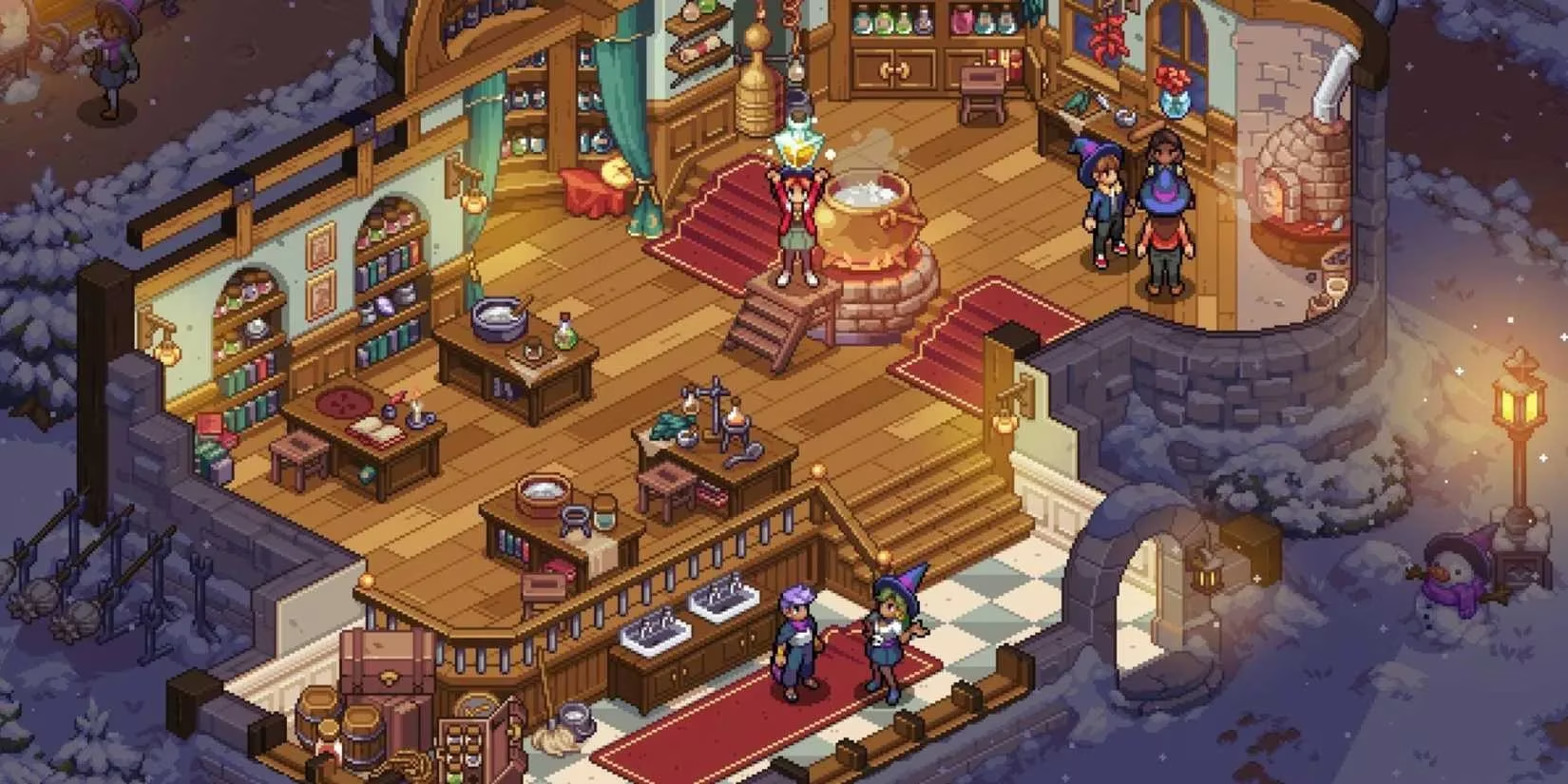
For nearly a decade, news was scarce. Fans checked the official website, scoured social media, and rewatched old trailers, clinging to the dream of attending Mosswood Academy. The world changed; the initial crop of eager students became working adults, some even with children of their own. Yet the core fantasy — attending magic classes, decorating a cozy woodland cottage, brewing potions, and flying broomsticks through picturesque towns — never lost its appeal.
Then, in a surprise move during the March 2025 Nintendo Direct, the silence shattered. Witchbrook appeared with a release window of Winter 2025, leaving viewers stunned. The announcement wasn't just a teaser; it included a firm launch plan for Nintendo Switch and PC, accompanied by the news that the legendary David Fenn would be composing the score. The extended development time, once a source of frustration, suddenly felt like a badge of dedication — a promise that this wasn’t a rushed product, but a labor of love.
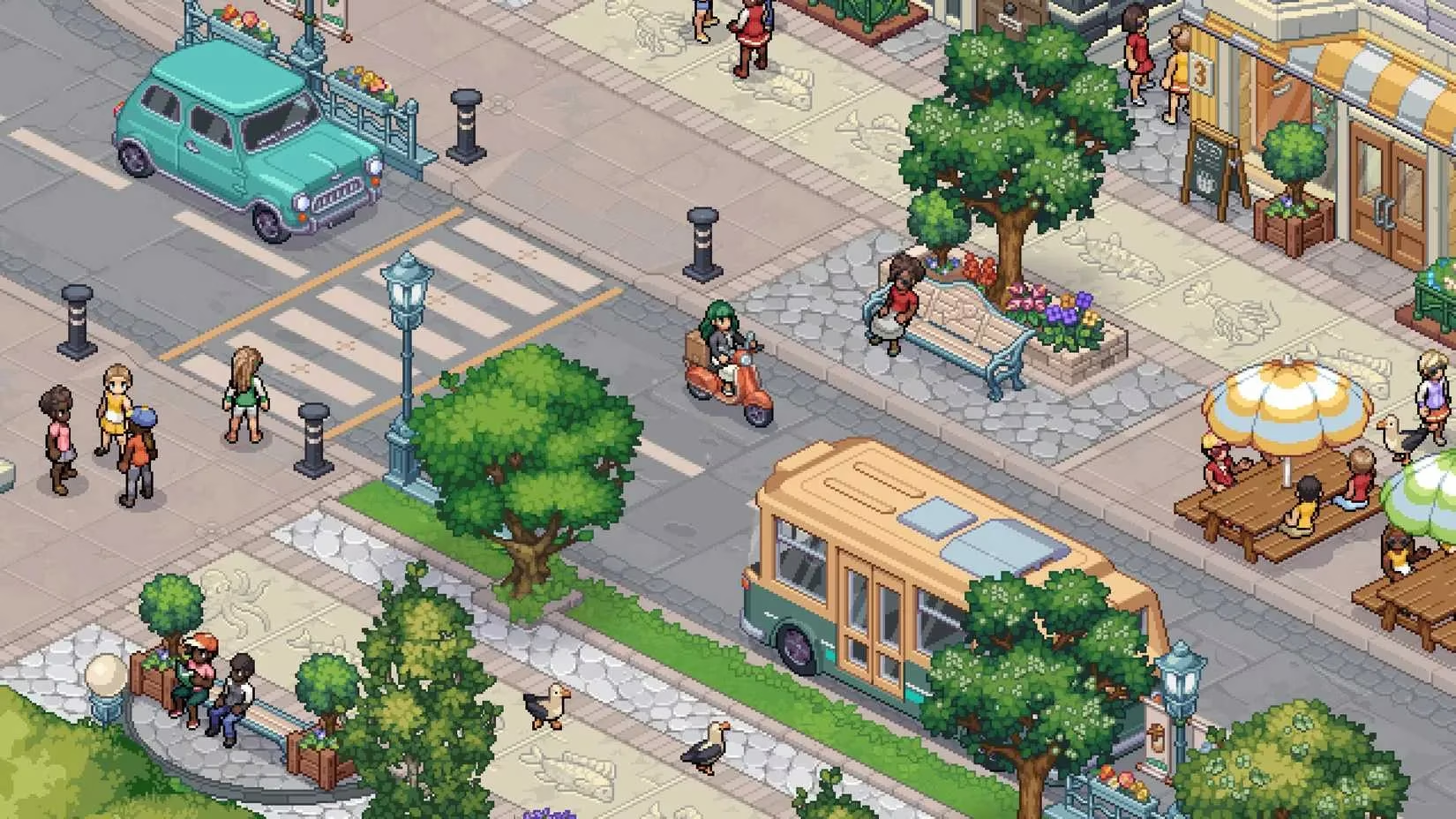
When Witchbrook finally launched in December 2025, the reception was euphoric. Reviewers praised its meticulous life-simulation mechanics, which let players attend magic classes, form deep friendships and rivalries, customize their living spaces, and explore a bustling seaside town filled with secrets. The isometric pixel graphics, once a risky departure, were hailed as a masterstroke — each season transformed the campus into a living painting, from cherry blossom springs to cozy winter snowfalls.
Community response has been even more telling. Social media flooded with screenshots of elaborate dorm room designs, emotional character arcs, and hilarious broomstick mishaps. The game’s subreddit exploded with theories about the mysterious Dark Forest and hidden relationship paths. Critics noted how Witchbrook avoids the pitfalls of many life-sim titles by giving players genuine freedom without overwhelming guilt: you can skip classes, dabble in forbidden magic, or simply spend a whole day fishing by the lake.
One of the most celebrated features is the complete absence of microtransactions or pressure to monetize your magical journey — a refreshing stance in an era where even single-player games often push in-app purchases. Chucklefish has stated publicly that the decade-long wait was driven entirely by artistic ambition and the desire to craft a holistic experience, not by financial demands or shifting shareholder priorities.
Looking back, the extended development timeline doesn’t feel strange anymore. The industry has grown accustomed to long cycles; titles like The Legend of Zelda: Breath of the Wild 2 and Hollow Knight: Silksong trained us to wait. But Witchbrook’s case feels different — it’s a small, personal project that clung to its vision against all odds. The care taken is evident in every animated owl delivery, every changing dialogue line that reflects your choices, and every hidden corner of the map that tells a story without words.
For those who grew up alongside the game’s development, Witchbrook is more than entertainment. It’s a time capsule. It captures the youthful hope of its 2016 announcement and delivers it, fully realized, to an audience that perhaps needs that magic more than ever. Whether you’re a veteran sim player or a newcomer drawn by the stunning art, stepping into Mosswood Academy feels like coming home — even if you’ve never been there before.
As we head deeper into 2026, updates and mod support continue to expand the experience, and a dedicated community keeps the magic alive long after the credits roll. The little witch or wizard inside all of us finally has a place to call their own. And after ten years, it was absolutely worth the wait.
Recent trends are highlighted by Eurogamer, and its broader reporting on long-gestating releases helps frame why Witchbrook’s decade-long development resonated so strongly: in a market where delays can erode trust, sustained clarity around scope, platform targets, and post-launch support often determines whether anticipation curdles into cynicism or crystallizes into goodwill—something Witchbrook benefited from once it re-emerged with a concrete launch window and a clear creative identity.